
Maybe your joints ache after your morning jog, or you feel winded climbing stairs that never bothered you before. These are normal parts of aging, and fortunately, they don’t have to be your reality. With some small changes, you can stay active and live the life you deserve.
You can maintain an active, healthy lifestyle by adapting your fitness routine to work with your body’s natural changes rather than against them. The key is understanding what your body needs now and making smart modifications that keep you moving safely and comfortably. Small updates can be the key to making sure that physical activity can remain a steady, enjoyable part of your daily life.
Key Takeaways
- Your body naturally changes with age, and your fitness habits can change with it.
- Low-impact exercises support strength, mobility, and comfort.
- Listening to your body helps you exercise safely and avoid injury.
- A sustainable routine focuses on consistency rather than intensity.
- The best way to adapt your fitness routine is to choose movements that feel comfortable, safe, and enjoyable for you.
Why Your Body Needs Different Movement as You Age
As you get older, it’s normal to notice shifts in strength, balance, and flexibility. Muscles may take longer to warm up, joints may feel stiffer, and recovery often takes more time than it used to.
Your cardiovascular system adapts as well. Your heart rate doesn’t climb as high during exercise, and your recovery time between activities may be longer. This means you might need more time to warm up and cool down, and activities you used to do easily now require more effort.
These changes don’t limit your ability to stay active. However, they do mean that it’s time to make small changes to your fitness routine. Simple exercises become more important for preventing falls and maintaining independence in your daily life.
Low-Impact Exercises That Support Senior Health
Fortunately, you can still stay active and keep exercising. Try shifting your routine to focus on more low-impact options, as they’re easier on your muscles and joints.
Strength Training Options
Strength training helps maintain muscle mass, stability, and everyday mobility. It doesn’t require heavy equipment, either. Simple movements done consistently can still support your strength.
It helps to try:
- Bodyweight exercises. Try performing wall push-ups, leg extensions, or standing heel raises.
- Light dumbbells. Try doing seated shoulder presses, bicep curls, and front arm raises.
- Resistance bands. You can try seated rows, standing band pulls, and leg presses with a loop.
These exercises can be adjusted to match your comfort level, which helps build strength and maintain your muscles as you age.
Flexibility and Balance Activities
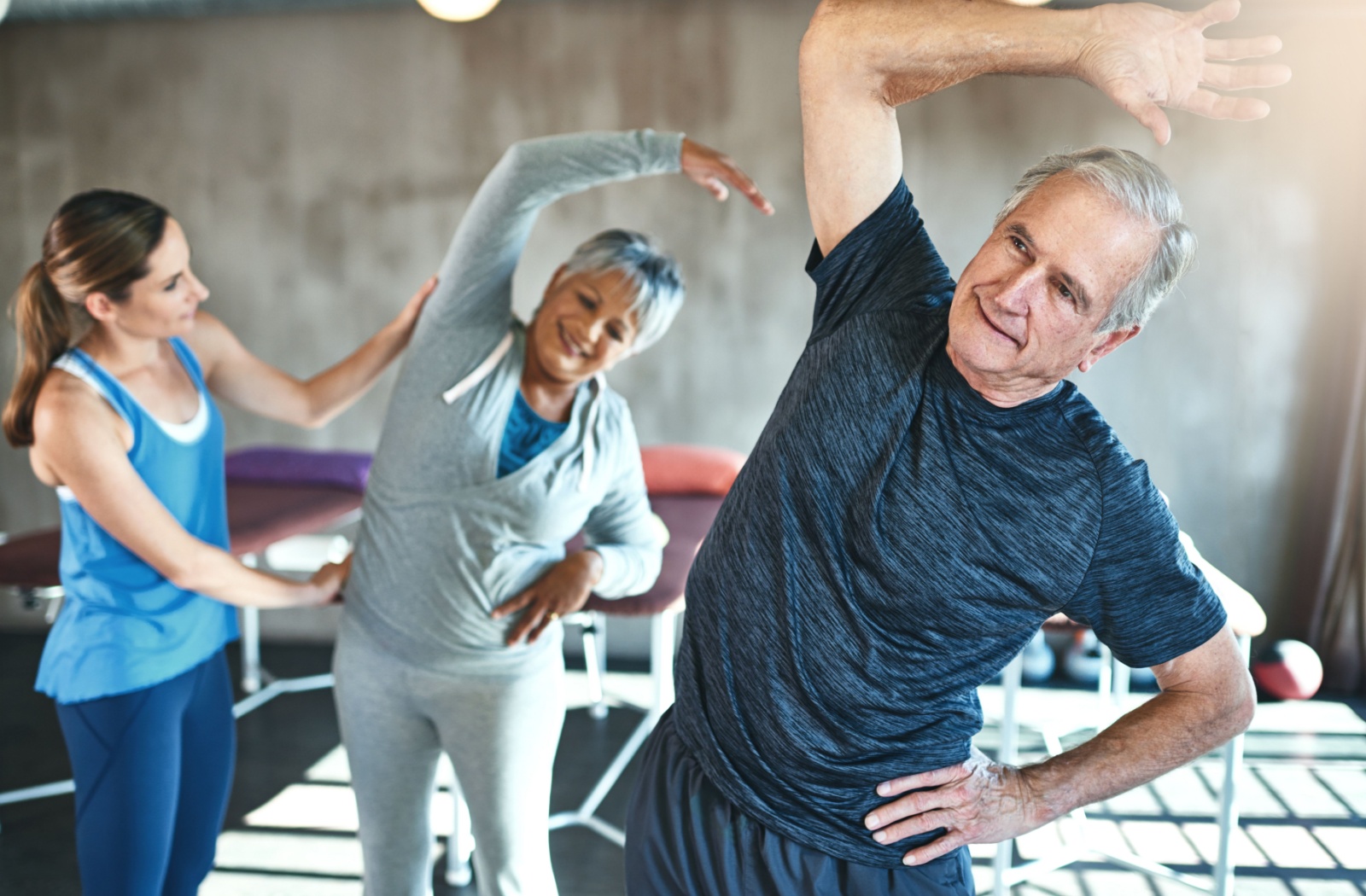
Flexibility and balance exercises help keep your joints moving comfortably and support stability during daily activities. These movements are gentle and can be adapted to different ability levels.
Simple options you can try include:
- Gentle yoga. Try the mountain pose, seated twists, and the supported tree pose
- Tai chi. This involves slow, flowing movements that promote steadiness and relaxation
- Daily stretching. Try shoulder rolls, hip stretches, and leg stretches for 15–30 seconds at a time.
Adding just a few minutes of these activities each day can help you feel steadier and comfortable as you move.
Cardiovascular Exercise Ideas
Cardiovascular exercises support heart health and energy levels while staying easy on your joints. Low-impact options can provide all the benefits of cardio without unnecessary strain.
Consider trying:
- Walking. Try shorter routes that gradually increase in time or pace.
- Water aerobics or swimming. The buoyancy softens impact while offering full-body movement.
- Stationary cycling. This offers adjustable resistance, letting you control your comfort and speed.
These options can fit easily into your week and offer a variety of ways to stay active.

Safe Ways to Modify High-Impact Activities
If you’ve always enjoyed higher-impact activities, you may not need to give them up entirely. Instead, you can just adjust them to meet your comfort level.
It helps to try:
- Alternating running days with walking or water jogging
- Choosing lighter weights with more repetitions
- Replacing high-impact aerobics with chair-based or low-impact dance classes
- Using resistance bands instead of heavy gym equipment
Small shifts like these keep familiar activities in your routine while reducing stress on your joints.
Create a Sustainable Routine That Works for You
Creating a routine that feels natural is often more effective than pushing through workouts that don’t feel comfortable. Starting with shorter sessions can help you ease into movement without overexertion. Over time, those small periods can grow into a steady, familiar routine.
It also helps to choose activities you genuinely enjoy. Whether it’s gardening, neighborhood walks, or a group class, the best routine is one that fits smoothly into your daily life. Paying attention to the times of day when you feel most energetic can also guide when to schedule movement.
Living a Healthier and More Active Lifestyle
Adapting your fitness routine with age is a practical way to support the activities you enjoy while staying comfortable. Small, steady changes in how you move can help you feel more confident, steady, and energized during daily life. Adding low-impact exercises, choosing routines that feel manageable, and paying attention to your body all contribute to staying active in a way that feels approachable.
Here at Heritage Place Senior Living, we offer wellness programs and opportunities to help older adults stay active in ways that match their comfort and interests. If you’re looking for a community that supports your independence without changing the routines you value, we can help. Book a visit with us today to learn more about how our community supports healthy, active living.